
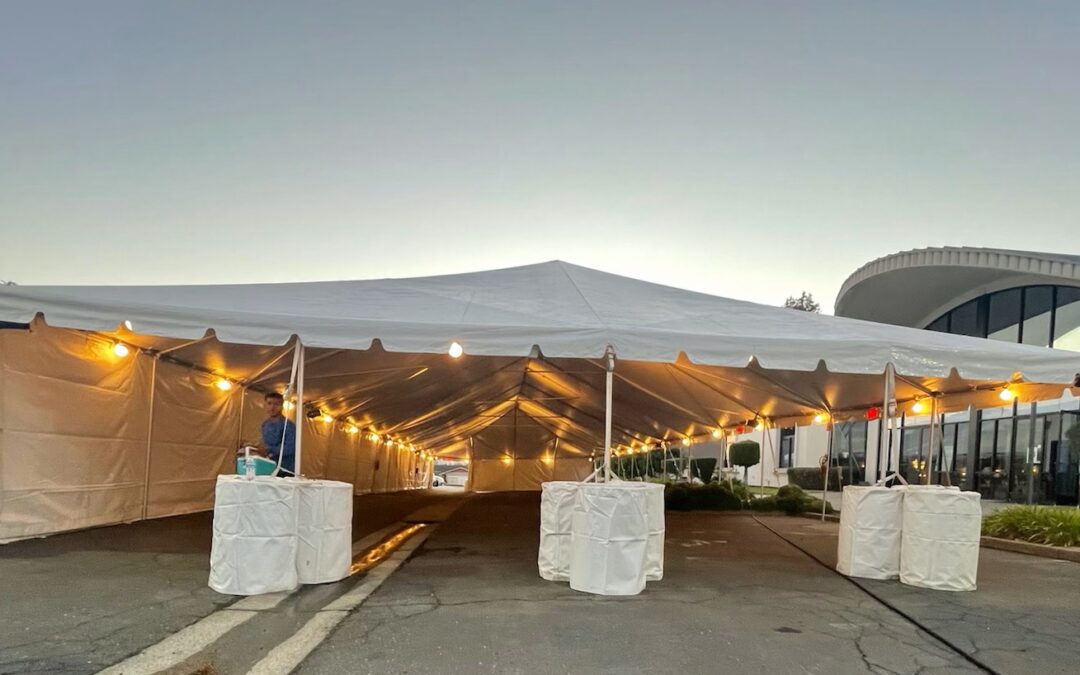
When considering a tent for your business’ needs in San Jose, it can be difficult to tell which variety is best for what you need. Large tents and frame tents, the two most common varieties, have unique sets of pros and cons. In this article, we’ll describe and compare these two types of tents so you can decide which one’s right for your requirements.
Large Tent vs. Frame Tent: What’s the Difference?
How Large Tents Are Structured
Large tents are the classic choice for tent rentals. They are composed of a piece of fabric supported by a series of metal poles. The poles are anchored into the ground and supported by stakes and ropes.
How Frame Tents Are Structured
Frame tents are a more modern option for tent rental. Rather than draping fabric over central poles, frame tents wrap a full metal frame structure in fabric, creating a wide, open space and defined interior.
Key Differences in Support, Space, and Setup
While they are similar, frame tents and large tents have several important differences, and it’s important to consider which one is right for you. Frame tents are more rigid, while large tents are more flexible. Frame tents don’t use the central poles of a large tent, so the tent’s interior is completely clear. Frame tents anchor best onto hard surfaces, and large tents must be staked into soft terrain like dirt or sand.
Frame tents are sturdier, so they can withstand stronger winds than large tents. However, their internal structure is more complex, requiring a lengthier setup.
When to Choose a Large Tent
Best for Large Guest Counts
Large tents are more cost-effective, so they’re better for projects involving large guest counts. Though the central poles do take up some space in the tent’s internal area, large tents can be easily deployed at a large scale, making them better suited to large numbers of guests.
Ideal for Grass or Soft Surfaces
Because the large tent’s supporting poles have to be planted into soft ground, they are the best choice for applications involving dirt, sand, or gravel. Though frame tents can be used in these cases as well, extra steps must be taken to secure them to the ground, so large tents are generally preferred for soft terrain.
Classic Outdoor Event Look
The central poles of large tents give them a recognizable “peak” structure. If you’re looking to channel a classic, nostalgic appearance with your tent rental, a large tent is the right choice.
Cost-Effective for Bigger Events
Large tents involve fewer material supports than frame tents, so they’re the best choice for events that take place over a larger area. As frame tents get larger, their costs increase significantly, so a large tent is the best way to cover ground while staying budget-friendly.
When to Choose a Frame Tent
Best for Hard Surfaces
Frame tents require significantly less support, so they can be installed on a wide variety of surfaces like asphalt, concrete, or even inside. If you’re renting a tent for a hard surface, a frame tent will be the best choice.
Open Interior Space Without Center Poles
The support of a frame tent comes from its metal structure, which supports the tent’s roof directly, rather than relying on a large tent’s central poles. Because these poles aren’t present, the tent’s inner space is free of obstructions, making it a better choice for projects involving guest movement or seating arrangements.
Flexible Layout Options
Because a frame tent’s interior is unobstructed and has high ceilings, they provide a much higher level of layout flexibility. When there are no support poles to plan around, layout options increase dramatically, making it the ideal choice for those prioritizing versatile arrangement.
Clean, Modern Appearance
The rigid structure of a frame tent means the fabric is significantly less slack, resulting in a cleaner, more shaped appearance. For renters looking to achieve a sharp, streamlined appearance, a frame tent is the more effective option.
Key Factors to Consider Before Renting
Event Size and Seating Capacity
Before renting, analyze the number of guests and other elements your project will involve. Frame tents offer more layout flexibility, but large tents are more cost-effective at large scales, so it’s important to prioritize the option that’s best for your event.
Installation Surface
It’s important to know the type of surface that your project will take place on. Frame tents are better suited to hard ground, while large tents need their support poles and ropes to be planted into soft terrain. It’s possible to use both types of tents on both types of terrain, but a frame tent is much easier to place on soft ground than a large tent is to place on hard surfaces.
Budget and Rental Costs
Remember to choose the best option for your project’s budget. Large tents are less expensive than frame tents, but less structured. The timeline of your project might also factor in; investing in a sturdy frame tent is often worthwhile for long-term uses like construction projects or restaurant expansions.
Weather and Wind Conditions
Keeping aware of the forecast for your project will help avoid unforeseen complications with your tent rental. Frame tents are significantly more wind-resistant, but less effective on soft surfaces, and large tents can’t be raised as easily on hard, frozen terrain.
Choosing the Right Tent for San Jose
San Jose’s warm, humid weather should be accounted for when selecting a tent. Consider waterproof status, ventilation, and other climate factors. If your tent will regularly be hosting over 50 occupants, fire escape plans must be submitted to the San Jose Fire Department.
Account for anchoring surface, time of year, and heating/cooling when selecting a tent type. Though both tents work well in San Jose, frame tents allow for greater layout flexibility, making it easier to incorporate seasonal equipment during long-term rentals.
Final Thoughts
When choosing between a large tent and a frame tent in San Jose, consider the benefits of both. Frame tents are sturdier and more rigidly shaped, but are often more costly and require a longer set-up process. Large tents are better suited to soft ground and more cost-effective, but aren’t as structured and have obstructed interior spaces. Regardless of which tent you choose, make sure to research San Jose’s city guidelines, being sure to obtain the necessary permits and file fire plans if necessary.