
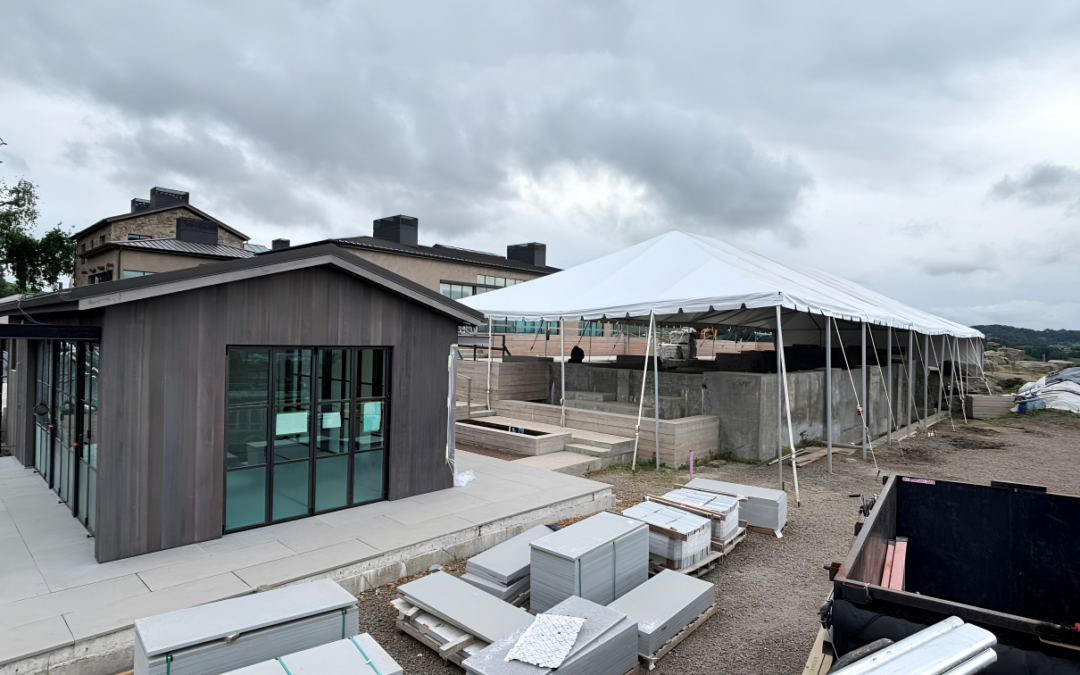
When a project needs covered space fast, the choice usually comes down to two options: a temporary tent structure or a traditional temporary building. Both deliver space without the cost and permanence of new construction, but they behave very differently once you account for budget, installation, and how long you plan to keep them. This guide breaks down the key differences so you can match the right structure to your project.
What Are Temporary Tent Structures?
A temporary tent structure is an engineered building that pairs a rigid aluminum or steel frame with a high-tension fabric membrane. Despite the word “temporary,” these are not backyard canopies. Professionally installed fabric structures can be used for weeks, months, or years, and many are engineered to meet demanding wind and snow loads.
Temporary tent structures can be fitted with HVAC, insulated walls, flooring, lighting, and secure doors, which makes them viable for storage, workspace, and climate-controlled operations. Their defining traits are speed, portability, and a modular design that can be expanded, reconfigured, or relocated as needs change. For extended projects, a long-term tent rental can hold a site for months or years while still coming down cleanly at the end.
Temporary Tent Structures vs. Traditional Temporary Buildings: Key Differences
Cost
- Temporary structure cost: Fabric buildings typically range from $5 to $40 per square foot, while modular buildings tend to run higher, between $20 and $60 per square foot.
- Modular building financing options: Traditional temporary buildings are often financed rather than bought outright, and dealers usually offer more than one path.
- Finance with lease buyout: A finance lease with buyout lets you set both the term and a buyout amount. You pay a monthly lease rate, then complete the purchase at the end of the term by paying the buyout you selected.
- True lease: A true lease offers low monthly payments over a term of roughly 12 to 60 months or more, depending on your needs.
- Building purchase: You can also buy the structure outright for a fixed amount, which gives you immediate ownership without ongoing lease payments.
- Budget and long-term plans: Fabric structures fit short- and mid-term needs cleanly; modular buildings held for years may justify a buyout or purchase.
Installation Timeline
Installation speed: Fabric structures win on raw setup speed, going up quickly with a small crew and minimal site prep. Modular buildings are also fast relative to new construction.
On-site placement: Fabric structures adapt to varied ground conditions and tight footprints, while modular units need a prepared, level pad and utility connections. Placement planning should account for access, surface type, and clearance for delivery equipment.
Remote location delivery: Fabric structures ship compactly and reassemble easily, which is a real advantage for remote or hard-to-reach sites. Their modular design keeps loading, transport, and reassembly straightforward even at scale.
Turnarounds and shutdowns: For plant turnarounds and shutdowns, where the maintenance window is short and fixed, industrial tent rentals can be dispatched and installed on a compressed schedule to keep the project on track. Rapid teardown at the end matters just as much as fast setup.
Property ownership: Whether you own the land matters. Leasing is the practical route for businesses that do not own their site, since it avoids tying capital to a structure on property you do not control.
Customization
Fabric structures scale in size and can add insulated walls, climate control, flooring, lighting, and specialized doors; some configurations are even blast-assessed for hazardous sites. A range of tent rental add-ons can turn a bare shell into a finished, functional workspace. Modular buildings offer a more finished interior out of the box, with rigid partitions, standard fixtures, and office-grade finishes.
Scalability
Fabric structures are the more flexible of the two. Their modular framing lets you expand, contract, or reconfigure the footprint as demand shifts, which suits operations that grow in phases. Modular buildings scale by adding sections, but reconfiguration is heavier and less fluid.
Movability
Fabric structures are far easier to move. Modular tents break down into smaller units that make loading, shipping, and reassembly simple, and the lightweight aluminum frame makes transport far less labor-intensive than the concrete or steel used in permanent buildings. Traditional temporary buildings relocate too, but they are heavier and require more effort to transport and reset.
Longevity
With regular maintenance and proper storage, high-quality temporary tents can last 10 to 20 years, though ground conditions, exposure, and frequency of use all affect durability. For multi-year, fixed-site use, a modular building may be the more durable long-term investment.
On-Site Placement
Fabric structures accommodate difficult surfaces and irregular sites, while modular buildings favor stable, prepared ground with utility access nearby. In both cases, planning around OSHA, fire safety, and local building codes keeps the installation compliant.
Common Uses for Temporary Tent Structures and Temporary Buildings
Turnarounds and Shutdowns
Refinery and petrochemical turnarounds are a core use case for fabric structures. They provide on-site, climate-controlled accommodation for turnarounds and plant shutdowns, and highly specialized blast-resistant tents keep the workforce safe on hazardous worksites while still meeting production goals.
Commercial Temporary Space
Both structures serve commercial needs like swing space, seasonal capacity, or a bridge before committing to permanent construction. Modular offices suit customer-facing or administrative use; fabric structures cover larger open-plan needs.
Storage and Operations
Fabric structures excel at overflow storage, staging, and covered operational areas. Construction and logistics teams use them for material protection, equipment storage, breakrooms, and added capacity, and a temporary warehouse tent can absorb inventory overflow as jobsite needs evolve.
Remote Worksites
For remote sites, portability is essential. Fabric structures ship easily and deploy fast, making them well suited to jobsite workshops, emergency response, and temporary shelter where rapid deployment is critical.
Events and Public-Facing Uses
Fabric structures remain a staple for events and public-facing installations, from festivals to hospitality builds. For branded activations and guest-facing setups, corporate event tents deliver a polished space, while modular buildings support operations through ticketing offices, medical stations, and staff facilities.
Final Thoughts
Temporary tent structures lead on cost, speed, portability, and scalability, while traditional temporary buildings offer a more finished interior and stronger long-term durability. Weigh your budget, timeline, site conditions, and how long you plan to keep the space, then match the structure to the project in front of you.