
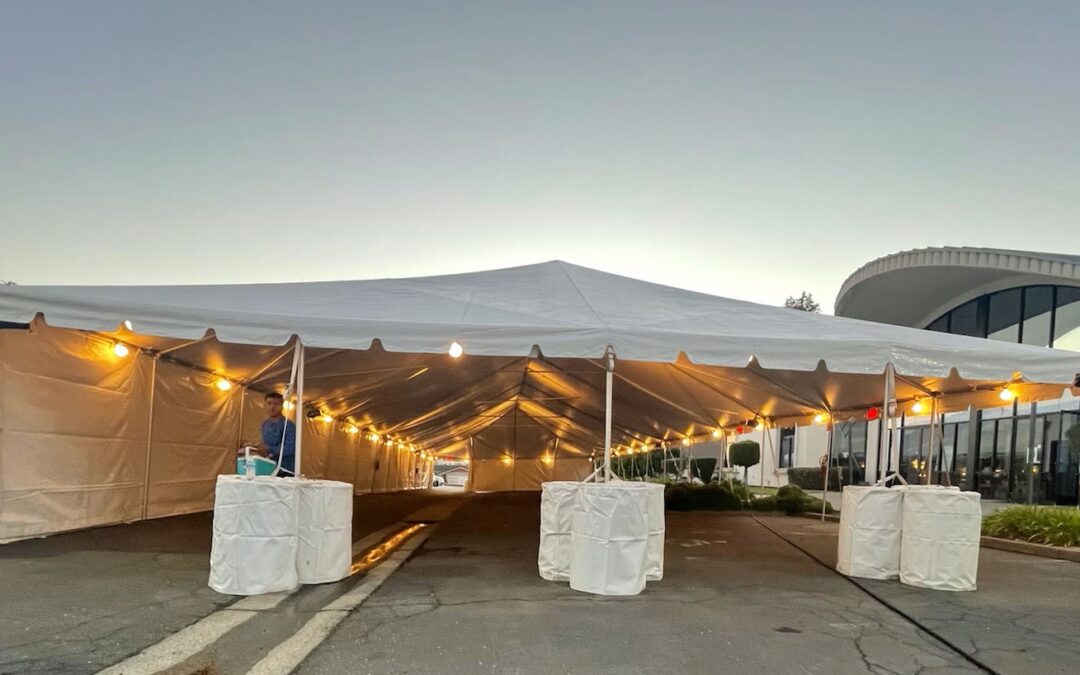
Renting a tent is typically much easier than owning one and setting it up yourself, and it does have to stress your budget. However, many hosts make preventable mistakes that can lead to added costs, logistical issues. Below, we discuss some of the most common mistakes that people make when renting tents and how to avoid them.
1. Underestimating Space Requirements
The Mistake
The easiest mistake is to not properly measure a space or your space requirements before you choose a tent rental. Without careful planning, you may end up with a tent that’s too small or unsuitable for long-term storage, construction, or additional space for hotels and restaurants.
The Fix
The simple fix here is to properly measure the space you are using and decide your exact requirements. As long as you have the needed space, it also can really never hurt to go a bit bigger so that you have some extra room just in case.
2. Booking Too Late
The Mistake
Planning ahead for your tent rental can save you from unnecessary stress, especially during peak seasons when demand is high. Waiting until the last minute can mean higher costs, fewer options, and even challenges finding the right tent for your needs. Whether you’re looking for extra space for storage, construction, or adding covered patios for restaurants or hotels, thinking long-term helps ensure you get the perfect fit for your project without the last-minute scramble.
The Fix
It’s always a good idea to book early, ideally three to six months in advance, to ensure you get the right size and style of tent for your needs. Early reservations also help secure additional features like lighting, heaters, or air conditioning, making it easier to set up long-term solutions for storage, construction sites, or extra space for hotels.
3. Ignoring Weather Conditions
The Mistake
No matter the time of year, you should never assume that weather conditions will cooperate. Failing to plan for possible wind, rain, heat, or cold can lead to overlooked needs, such as sidewalls, flooring, or climate control equipment, which are essential for long-term uses like storage, construction, or extra space for hotels and restaurants.
The Fix
The first step is to choose tents rated for your local climate and season. Add sidewalls, heaters, or air-conditioning units depending on the forecast. For unpredictable weather regions, you should always have a backup plan for extreme conditions so that your guests are never uncomfortable.
4. Choosing Style Over Function
The Mistake
Another common mistake is remembering that function must be considered before style. For example, someone could choose a pole tent for a hard surface where staking simply isn’t possible. That person would have rented a tent that may look good but is ultimately not stable.
The Fix
The fix here is to match the tent type to your specific site conditions. Frame tents work best for solid surfaces like concrete or patios, while pole tents are ideal for grassy or soft ground. Temporary tent structures with clear-span layouts are also a strong option for large-scale or long-term needs. Be sure to discuss your site conditions in detail with your rental company before finalizing.
5. Overlooking Permits and Regulations
The Mistake
A more complicated error is not obtaining local permits for large tents or open-flame setups (heaters, catering). Ignoring fire safety codes or insurance requirements can be unsafe and costly, and it could lead to delays or issues with your project.
The Fix
Your preparation process should include checking with your municipality early because permits can take days or even weeks to process. Confirm also that your vendor is licensed, insured, and compliant with fire safety standards (e.g., flame-retardant certification). Many rental companies can handle permits on your behalf, but you should ask upfront to make sure.
6. Miscalculating Power and Lighting Needs
The Mistake
It can also be easy to underestimate how much power is needed for lighting, sound systems, catering equipment, and heaters. Forgetting extension cords or proper circuit load management can lead to malfunctions and inadequate power for your setup.
The Fix
Review your electrical requirements with your vendors and venue beforehand and rent additional generators, LED lighting, or distribution boxes as needed. It’s always best to test every piece of equipment in advance to ensure everything is functioning properly and nothing needs to be replaced or added.
7. Skipping a Site Inspection
The Mistake
Booking a tent without a professional site evaluation can lead to accidentally overlooking issues like uneven ground, sloping, obstacles, or underground utilities that affect where and how your tents will sit.
The Fix
Always request a site inspection before confirming your rental and let the appropriate professionals measure, assess surface stability, and recommend anchoring methods. This fix prevents surprise delays or costly adjustments during setup.
8. Forgetting Setup and Teardown Logistics
The Mistake
Another very basic mistake is failing to confirm setup times, delivery routes, or access restrictions with your venue. Miscommunication with other vendors will only exacerbate this issue and cause a scheduling headache.
The Fix
Schedule installation at least one day in advance when possible and coordinate with all of your vendors to avoid any overlap or blocked access. Verify any pickup times and cleanup responsibilities in writing to ensure responsibilities are clearly allocated.
9. Failing to Budget for Add-Ons
The Mistake
Assuming the tent rental includes essentials like flooring, lighting, or climate control or not accounting for delivery fees, labor, or security deposits can easily throw off your budget by hundreds or even thousands of dollars.
The Fix
Request an itemized quote early in planning and then factor in any possible add-ons to avoid any last-minute expenses. Compare multiple vendors for transparent pricing, and then follow a checklist so that you have every factor covered.
10. Hiring the Wrong Rental Company
The Mistake
Choosing a rental company based on price alone without checking experience, reviews, or equipment quality is one of the worst mistakes you can make.
The Fix
Research multiple companies and read verified reviews. Ask for referrals, inspect sample setups, and verify their insurance and permits. Look for vendors experienced with your specific needs and make an educated decision.
Conclusion
Tent rentals can provide significant value when planned properly. Avoiding these common mistakes ensures that your setup will be safe, comfortable, and visually impressive while staying on budget.