
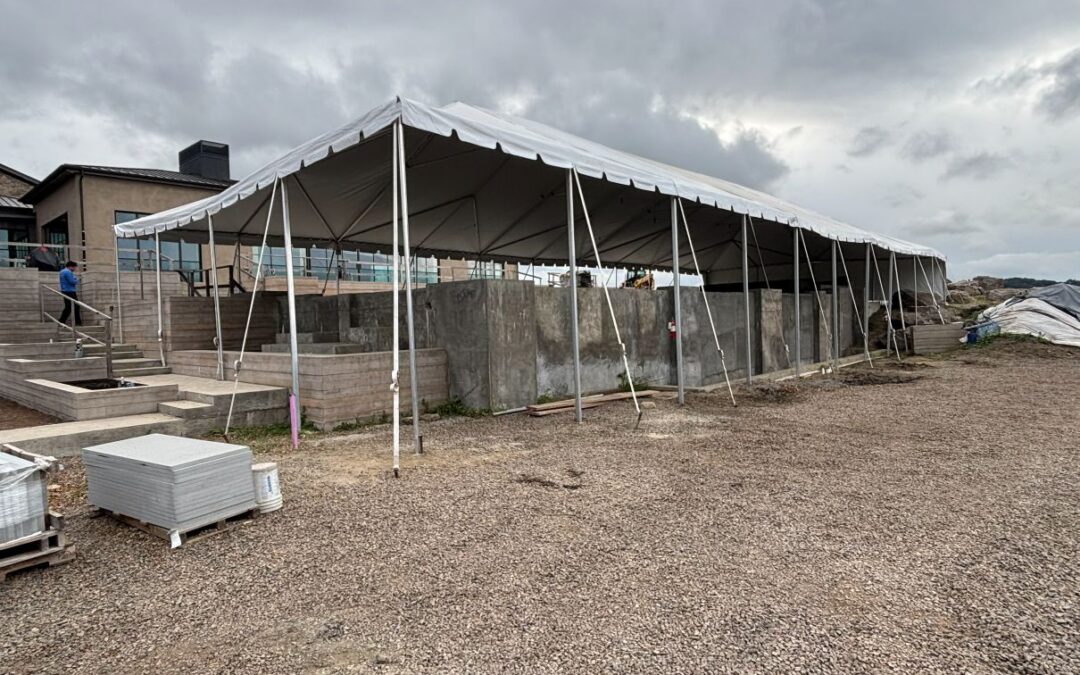
Temporary tent structures are popular solutions for a variety of industries and events, serving as easily-set-up storage solutions, workplace rest areas, and even event spaces. Even though many tent installations are temporary, it’s important to know exactly how long you can expect a tent to stay up. Here are some basic guidelines and insights on how long you can expect a temporary tent to last!
Factors That Affect How Long a Tent Can Stay Up
How long a temporary tent can stay up depends largely on a variety of factors, including the following:
Material Quality
Quality of material greatly affects a tent’s longevity. Durable materials like heavy canvas, polyester, and vinyl are most common, and can withstand elements such as sunlight, wind, rain, and snow.
Frame Construction
Whether you choose a frame tent or a pole tent will affect your tent’s longevity. Frame tents use self-supporting steel or aluminum support structures without the need for poles, while pole tents use interior poles and are generally less durable.
Weather Conditions
Weather conditions will have a major impact on tent longevity. Tents erected in mild, moderate, and consistent climates will be able to endure longer periods of use, while those in stormy, windy, and changeable weather climates will often need to be replaced more frequently.
Fabric Weight
Fabric weight can affect how long your tent will last before its fabric needs replacing. Heavy-duty fabric for rougher climates will last longer, while lighter fabric for milder, warmer climates may wear down more easily if exposed to severe weather.
Coating Wear
Over time, the protective coating on a tent’s fabric will degrade. Common sources of coating wear include long-term UV light exposure, consistent rain and moisture, and snow or ice buildup.
Maintenance and Care
The need for occasional maintenance will also impact your tent’s longevity. Maintenance does not just include fabric wear and repair, but also adjustments to frames and anchorings, interior changes, and management of accessories such as lighting or climate control.
How Long Can a Temporary Tent Structure Stay Up?
How long a tent can stay up depends on the type of tent you choose and how long you intend to use it for. Below is a handy guide to help you understand expectations:
| Timeframe of Use | Duration | Notes |
| Short-Term Use | Up to 3 Days | Commonly small pole tents or canopies |
| Medium-Term Use | Up to 1 Week | Larger pole/canopy tents or small frame tents |
| Long-Term Use | More Than 2 Weeks | Large frame tents with anchoring |
| Year-Round/Permanent Use | Unlimited | Heavy-duty tents with strong fabric and steel frames |
When It Is Time to Take the Tent Down?
When you choose to take your temporary tent down is up to you, but in general, it’s best to do so before signs of damage and wear begin to accumulate. Oftentimes, rentable tents like those used at jobsites are flexible and relocatable, meaning that you can easily remove and replace them as needed, with little disruption.
How Tent Material Affects Lifespan
Tent material is probably the most important aspect that affects lifespan. Tents that use lighter fabrics and materials like cotton, cloth, or thinner canvas are great choices for generally sunny, warm, and mild climates where you don’t expect much rain or wind, but if you need a tent that will last a long time even in the face of dramatic weather conditions, gravy-duty canvas, nylon, vinyl, or polyester tents are much more advisable. These tents can often last many weeks, whereas lighter tents can only endure inclement weather for hours or days.
Weather Conditions That Shorten Tent Use
Heavy Rain
Heavy rain is a common cause of tent degradation. Long-term water exposure erodes fabric coating, causes ponding and leaks, and may lead to flooding or water damage to stored items.
Wind Exposure
Wind can easily damage temporary tent structures. Sustained exposure to high winds may loosen or damage tent framing, tear or destroy tent fabric, and rip out anchorings.
Sun and UV Exposure
Sun and UV exposure are common threats in warm climates like the San Jose area. Sun exposure can fade or degrade tent fabric, causing it to become brittle and worn down.
Year-Round Outdoor Conditions
Tents that stay up all year frequently endure changing and unrelenting weather. While they may not be exposed to the same weather conditions on a consistent basis, the cumulative effects of many different weather types, including sunlight, rain, wind, and snow, can cause compounding wear and tear.
Signs It Is Time To Take Down or Replace the Tent
Not paying attention to your rental tent’s condition is one of many common mistakes a renter can make. Watch out for these signs that your tent may need to be removed or replaced:
- Visible Fabric Wear: The fabric of the tent is beginning to fray or look worn down, with holes or brittle patches visible.
- Coating Wear: The protective coating on the tent is peeling, cracked, or eroded.
- Frame Damage: The tent’s framing or poles are loose, bent, or buckling.
- Water Leaks or Poor Weather Protection: Water leaks through the tent roof when it is raining, and wind or heat frequently penetrate the tent.
- Reduced Stability in Wind or Rain: The tent movers, wobbles, or sways in windy, rainy conditions.
Can Tents Stay Up All Year Round?
A heavy-duty tent certainly can stay up year-round with the right care and maintenance. Generally, for such long-term use, a heavy-duty tent will be necessary, and you will need to continually inspect your tent to ensure that it is not getting worn down or in need of repair.
How To Extend the Lifespan of Your Tent
You can extend your rental tent’s lifespan by investing in regular maintenance and working closely with your tent rental company to ensure that your tent is up to par. Also be sure to check out our extensive tent rental checklist before rent to make your rental and maintenance process easier!