

Event tents are a source of comfort, weather protection, and atmosphere for many large corporate and private gatherings. Tents come in many styles, each with unique advantages. Choosing the right event tent depends on venue surface, guest count, weather exposure, event style, and whether you need an open floor plan or maximum stability. This guide compares the most common event tent types by structure, advantages, and best use cases.
Frame Tents
Structure & Design
Frame tents are structured solely around an outer frame. They are freestanding and have no center poles. This helps open up interior space for large events or storage tent use, giving guests and employees room to move around.
Benefits
Frame tents feature versatile layouts, as they can be combined or attached to create large spaces. They are able to stand on hard surfaces and survive long-term use, making them great for industrial jobs. Because they do not use center poles, frame tents also make it easier to plan seating, staging, buffet lines, vendor booths, and other event elements that need a more efficient floor plan.
Best Uses
Frame tents are best for corporate events, trade shows, and fundraisers. Their open space and easy installation makes them great for short-term events or long-term gatherings such as pop-up markets and festivals. They are also a strong option when a venue has asphalt, concrete, or other surfaces where staking may be limited
Pole Tents
Structure & Design
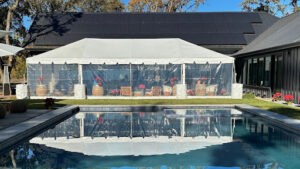
Pole tents are supported by both center poles and side poles. These poles provide greater structural stability, but they do feature less interior space, which can be remediated by effective interior layout. Their design also creates the classic peaked look many people associate with outdoor celebrations and traditional tented events.
Benefits
Pole tents have a classic, elegant look naturally associated with gatherings, fairs, and festivals. They are great for large gatherings, as their added stability allows for greater size and more guests. Their dramatic peaks can help create a more formal or festive atmosphere, especially for events where appearance is a major priority.
Best Uses
Pole tents are a classic choice
for a variety of events. They are perfect for weddings, festivals, and traditional outdoor parties. Pole tents are a common choice for communal gatherings and venue spaces with indoor and outdoor settings. They are often best suited to grass or other stake-friendly surfaces and work well when style matters more than having a completely unobstructed interior.
High Peak Tents
Structure & Design
High peak tents feature pitched ceilings with tall peaks, creating a spacious interior. These tents are tension-based, meaning that they stay upright from the tension created by the ceiling pitch on the support poles. They are also a smart choice when you want a smaller tent footprint to feel more upscale or visually prominent.
Benefits
High peak tents are striking and have a stylish silhouette that is eye-catching to guests and passersby. Because of their height, high peak tents are often visible from far away, acting as landmarks or directional aids.
Best Uses
High peak tents are best for upscale events like corporate functions, receptions, and galas. They provide a stately elegance that can impress guests and attendees. They can also work well for entrances, registration areas, cocktail spaces, sponsor activations, and VIP areas within a larger event layout.
Clear Top Tents
Structure & Design
Clear top tents are distinguished by their transparent, see-through canopies. These tents have ceilings and sidewalls of clear plastic, allowing guests to see the tent’s surroundings clearly. Because they visually connect the tent to its surroundings, they are especially effective when the venue itself is part of the event experience.
Benefits
Clear top tents offer scenic views and natural light in the daytime. At night, when paired with lighting, they offer an elegant evening look that can allow for stargazing and ambience.
Best Uses
Clear top tents are great for outdoor weddings, garden parties, and evening events. These tents create continuity between the interior event space and the exterior setting. They are often a strong fit for scenic properties, landscaped venues, waterfront settings, or events with a strong lighting design.
Marquees & Walkway Canopies
Structure & Design
Marquees and walkway canopies are long, narrow tent extensions that create corridor-like spaces. They are typically frame-structured without interior poles, allowing for easy navigation.
Benefits
Marquees and walkway canopies create covered pathways or hallways to connect spaces located in adjoining tents. They afford additional privacy and protection to guests moving between spaces. They can also improve overall guest flow by guiding people more comfortably between entrances, dining areas, ceremony spaces, restrooms, or service zones.
Best Uses
Marquees and walkway canopies are best for large weddings, festivals, and multi-tent venues. They add continuity, elegance, and sophistication to a large event, and prevent guests from having to endure the elements while walking between spaces. They are especially useful when an event is spread across multiple structures or when organizers want the event layout to feel more connected and polished.
Clear Span Structures (Structure Tents)
Structure & Design
Clear span structures feature no interior poles and are industrial strength. These tents have open interior space and reinforced framing so they stay upright even in bad weather.
Benefits
Clear span structures are durable, customizable, and weather-resistant. They are made to withstand harsh conditions while staying upright and providing interior space. Their large, unobstructed interiors make them especially useful for staging, equipment, seating, logistics, and other large-scale event needs.
Best Uses
Clear span structures are preferable for large corporate events, exhibitions, and long-term installations. They are the best way to create a large event space without sacrificing stability or structure. They are often the right choice when weather protection, structural reliability, and long-duration use are top priorities.
How to choose the right event tent
Many factors will influence how you choose the best tent for your event. Depending on your guest count, venue size, weather, aesthetics, and budget, different types of tent may fit your needs better than others. For example, if you are looking for classic elegance, you may be best-suited by a pole tent, but if you’re looking for flexibility and open space, a frame tent may be the way to go.
FAQs About Event Tent Rentals
Do I need a permit for a tent?
Many tents do require permits and licensing, but some do not. Call your local authorities to understand the regulations in your area, or call All Occasions Tents at (800) 799-8368 for more information.
How early should I book?
It is best to call as far ahead as possible to book your tent, but at AOT, we can often organize tent rentals with as little as 24 hours. For more information, call us at (800) 799-8368.
What size tent is right for my event?
The size of the tent you select will depend on your guest count, venue size, and other factors. AOT’s experienced workers can guide you through selecting the best size tent for your event. Call us for more information or fill out our online form to get started!
Can tents handle wind/rain?
AOT’s tent rentals are designed to easily handle wind and rain. Our tents are made from waterproof and fire-retardant materials, and our support structures are heavy-duty aluminum or steel frame construction engineered for long-term durability.
Final Word
Choosing the right type of tent for your event is crucial to its success. With the right tent, you can thrill guests, run your event smoothly, and have a great setup and removal experience. Plan ahead and consult rental providers like All Occasions Tents today to get started on setting up your event for success!