
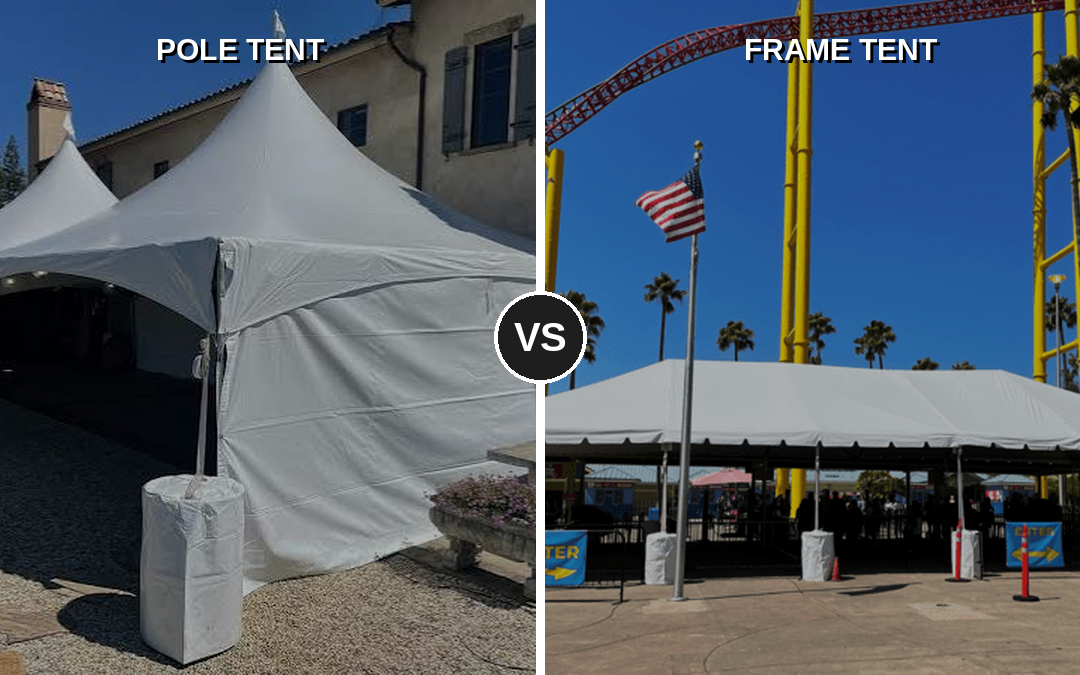
Choosing the right tent can make or break your rental project. Whether you are adding new space at a winery or a new construction project, frame tents and pole tents tend to be the two most popular options. They serve different purposes and perform differently depending on the situation, so it is important to be informed when making your decision. Keep reading to learn more about both types of tents, including everything you need to know before booking.
Frame Tent vs. Pole Tent: Key Differences
The main difference between the two types of tents are that frame tents are supported entirely by an internal metal framework, while pole tents rely on tall center and perimeter poles paired with tension to hold their shape. This difference affects how each tent looks, how it’s installed, where it can be used, and how much it costs. Below, we break down each of these key differences.
What Is a Frame Tent?
Frame Tent Structure
A frame tent uses a self-supporting aluminum or steel framework that holds the canopy without any interior poles. No tension, stakes, or wires are required, as the frame bears all of the load.
Frame Tent Appearance
Frame tents have a clean look with flat or gently sloped rooflines. The absence of interior poles gives the space an unobstructed appearance.
Frame Tent Setup
Setting up a frame tent takes longer than a pole tent since the framework is assembled piece by piece. However, the result is a tent that can be set up on virtually any surface. This is especially important for construction projects that need tents installed on concrete or asphalt.
Frame Tent Space Usage
Since frame tents have no interior poles, every square foot is usable. This is ideal for tent rental projects with more extensive space needs.
Frame Tent Anchoring
Frame tents can be anchored with ground stakes, water weights, or concrete blocks. This makes them a viable option on pavement, patios, or other solid surfaces. They are also more durable in adverse weather conditions.
When to Use a Frame Tent
Frame tents are the preferred option for hard or paved surfaces, tent rentals requiring an open floor plan, or when a clean look is a priority.
What Is a Pole Tent?
Pole Tent Structure
A pole tent is supported by tall center and perimeter poles, with the canopy pulled taut between them using tension. This creates the characteristic peaked, flowing roofline.
Pole Tent Appearance
Pole tents have a classic, elegant look. The high peaks and swooping valleys of the fabric give pole tents a festive, celebratory feel.
Pole Tent Setup
Pole tents go up relatively quickly when compared to frame tents. The crew raises the center poles, positions the perimeter stakes, and pulls the canopy into tension. Pole tents require open, stackable ground and extra space around the perimeter for guy lines.
Pole Tent Stability
Pole tents handle moderate wind and weather well when properly installed. The tension-based design distributes stress effectively, though they are more vulnerable in severe weather.
Pole Tent Anchoring
Pole tents must be staked into soft earth, which is the most limiting factor of their design. This rules out installation spaces with paved or hard surfaces, as they must be anchored to grass or natural ground.
When to Use a Pole Tent
Choose a pole tent for grass or natural ground venues, budget-conscious tent rentals, or occasions where the traditional design fits.
Frame Tent Pros and Cons
Advantages of Frame Tents
- No interior poles means completely open, flexible floor plan
- Can be installed on any surface
- Versatile anchoring options work when ground staking isn’t possible
Disadvantages of Frame Tents
- Higher rental cost due to the framework’s complexity
- Longer setup and breakdown times, requiring more labor
- Heavier equipment can be harder to transport
Pole Tent Pros and Cons
Advantages of Pole Tents
- More affordable to rent and set up
- Faster installation
- Well-suited for large, open grass surfaces
Disadvantages of Pole Tents
- Must be staked into soft earth (not suitable for hard surfaces)
- Interior poles limit equipment and infringe on the floor plan
- Guy lines extend beyond the tent perimeter, requiring extra space
- Less flexible anchoring options
Key Factors When Choosing Between a Frame Tent and Pole Tent
Rental Surface
Venue surface is often the deciding factor when choosing what type of tent to use. If the tent needs to be installed on grass or natural ground, either type of tent works. If the tent must be installed on pavement, gravel, or any hard surface, a frame tent is your only option.
Tent Capacity
Both types of tent can be used for large capacities, but frame tents are often preferred for smaller tent rentals where an open floor plan matters most. For larger tent rentals, pole tents are a cost effective way to cover significant ground.
Interior Layout
If your tent rental requires an unobstructed floor plan, a frame tent is your best choice. If you don’t mind working around interior poles, a pole tent is also a great option.
Weather Conditions
While both tents handle moderate weather well when properly installed, frame tents generally offer more consistency for more adverse weather conditions due to their weight and anchoring techniques.
Rental Duration
For longer rentals the frame tents robust structure is more preferable, as they hold up well over extended periods. Pole tents are also a viable option for these types of rentals, but may require extra monitoring if the weather shifts.
Budget
If cost is a primary consideration in your choice of tent, pole tents are the way to go. Pole tents typically have lower rental fees and labor costs, adding up to meaningful savings. Frame tents cost more but deliver a stronger and more versatile design.
Final Thoughts
Ultimately, neither tent is universally better. It comes down to where you’re installing your tent, what you need to fit inside, and how durable the tent should be. When in doubt, talk to a professional tent rental company who can assess your venue, review your layout needs, and recommend the right structure for your tent rental.