
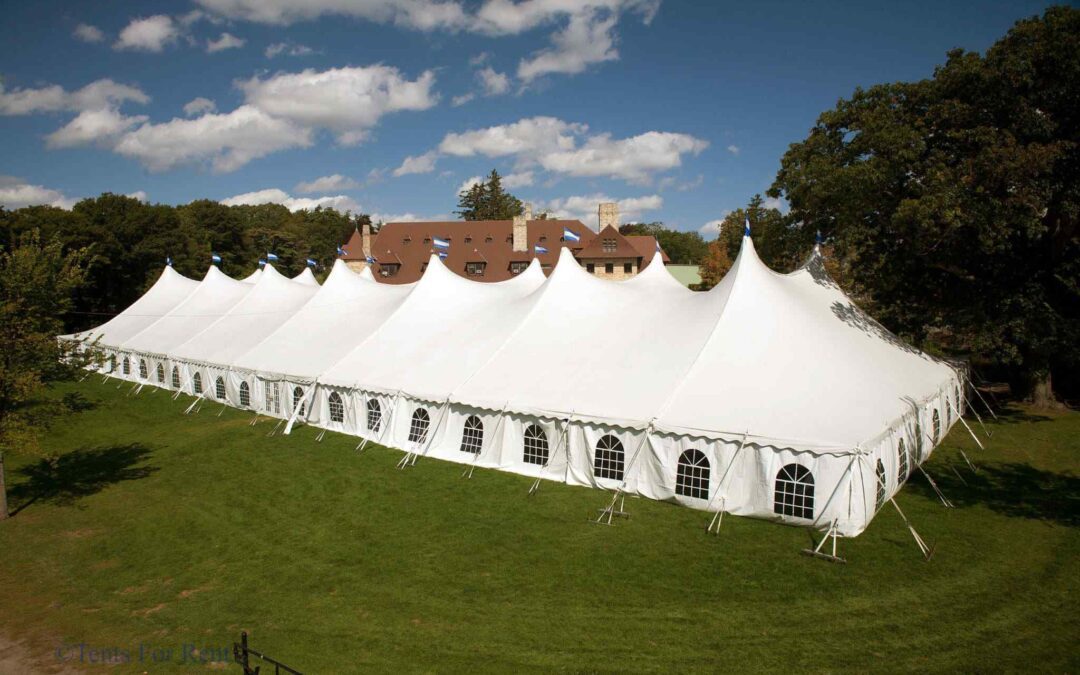
Everyone loves an outdoor event! If you’ve gone to an outdoor wedding, market, festival, or even a camping trip, you probably know that it’s common for such events to use tents as a form of temporary shelter for guests. As useful as outdoor tents can be, standard tents can quickly become hot and uncomfortable because they trap sunlight and heat. However, modern amenities such as climate control now allow outdoor tents to remain cool and comfortable for long-term use. Below, we’ll go over the benefits of these tents and how to pick the best one for your event!
Why Outdoor Tents Heat Up So Quickly
There are a few reasons why outdoor tents heat up quickly, including the following:
The Greenhouse Effect in Tents
The most common cause of overheating in tents is the greenhouse effect. This phenomenon occurs when sunlight passes through tent fabric, much like through the glass walls of a greenhouse. The sunlight carries heat with it, and that heat gets trapped inside, raising the interior temperature of the tent beyond outside levels.
Heat-Trapping Materials
Many tents amplify the greenhouse effect because they are made of insulating materials. Common tent materials include polyester, polycotton, nylon, and canvas. These fabrics retain radiant heat, which is great for insulation in cold weather, but problematic in the summer months. Many tents also have reflective coatings, which can worsen heat buildup without proper ventilation.
Poor Ventilation and Air Circulation
Many outdoor tents have almost no ventilation if they have sidewalls, leading to limited airflow due to zipped panels and lack of vents. As a result, warm air rises and stays trapped under the canopy. The effects of poor ventilation are often magnified by placement errors (i.e., tents that are set up under direct sunlight with no cross-breeze).
Dark Colors and Direct Sunlight Exposure
Much like clothing, the color of a tent’s outer material can affect how hot its interior gets. Dark-colored tents absorb more UV and infrared radiation, increasing interior heat. Angle of exposure to sunlight can also be a factor, as south-facing or unshaded setups amplify solar absorption throughout the day.
The Hidden Risks of Overheated Tents
Naturally, an overheated outdoor tent is going to be uncomfortable, but in addition to the discomfort, overheated tents can also pose dangerous risks to people and property, such as:
- Discomfort and dehydration for guests or campers.
- Heat stress risks during long events or midday hours.
- Electronic and décor damage in event setups (i.e., lighting, flowers, or AV systems).
- Reduced guest dwell time and negative experiences at weddings or outdoor functions.
Traditional Cooling Tricks (and Their Limits)
There are a few common methods event hosts use to keep tents cool, but while these can provide some relief, they aren’t perfect.
Shade and Orientation
In order to exploit natural shade, hosts often pitch tents under trees, near natural wind paths, or away from direct sunlight. This helps reduce temperatures slightly, but is often only marginally effective on hot, windless days.
Reflective Tarps or Sunshades
A reflective tarp or sunshade placed over a tent can reduce some radiant heat, but doesn’t regulate interior temperature. Overall temperature still largely depends on outdoor airflow and ambient temperature, which tarps cannot impact.
Mesh Panels and Fans
Tents with mesh panels improve ventilation by allowing more air inside the tent, but are typically limited to small areas. They are not practical for large gatherings or high guest densities, as a large number of people gathered together will neutralize the ventilating effect with their combined body heat.
Portable Fans or Coolers
Temporary fans or coolers can provide some relief from heat, and battery-powered options are convenient for short periods. However, these devices have limited runtime, provide uneven cooling, and require frequent maintenance, and oftentimes, they simply wind up circulating hot air.
How Climate-Controlled Tents Solve the Problem
What Is a Climate-Controlled Tent?
A climate-controlled tent is a specialized event tent that is great for long term use equipped with integrated air-conditioning or heating systems. Climate-controlled tents are designed to maintain consistent temperature and airflow year-round, essentially replicating the internal heating and cooling systems of a permanent structure within the tent.
How They Work
Climate-controlled tents use modern air-conditioning technology to keep interiors cool and comfortable for a long term use. HVAC units or portable air handlers circulate cool air evenly through ducted systems in the tent structure, while insulated sidewalls and heat-resistant fabrics prevent hot air infiltration. Some climate-controlled tents even include dehumidifiers to manage moisture and condensation.
Benefits for Event Comfort and Safety
Climate-controlled tents have many benefits, with their main advantages including:
- Keeping temperatures stable even in direct sunlight.
- Reducing humidity and preventing overheating for guests, staff, or performers.
- Being ideal for weddings, corporate functions, trade shows, and long-duration events.
Versatility Across Weather Conditions
Climate-controlled tents aren’t just a summer luxury. These same tents are equally effective in winter, with heating systems taking the place of HVAC units. Many climate-controlled tents are adaptable for both temporary and semi-permanent installations, with climate control systems able to be switched out quickly and with minimal disruption.
Choosing the Right Climate-Controlled Tent
If you are considering a climate-controlled tent for your event, here’s how to choose the best one for you:
Factors To Consider
When choosing a tent, consider these factors:
- Tent size and capacity (guest count, event type)
- Duration of use (hours vs. multi-day)
- Site power availability and HVAC access
- Local weather conditions and peak heat hours
Common Configurations
Climate-controlled tents come in many configurations. Some are frame tents with AC ducts, others are clearspan or modular tents with insulation panels, and some may be hybrid canopy-style tents with portable climate systems.
Key Takeaways
Traditional tents overheat because of heat-trapping materials, limited airflow, and direct solar exposure. While standard cooling hacks can provide temporary relief, they don’t address the underlying problem. Climate-controlled tents offer a reliable, scalable solution for comfort, safety, and event success.