
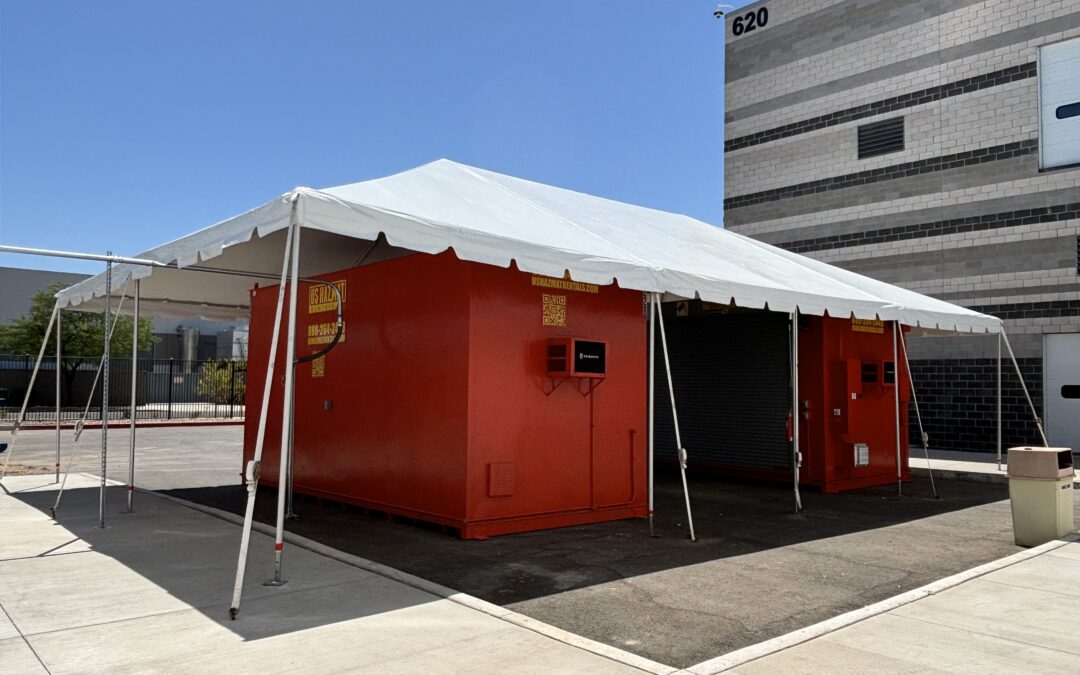
Climate-controlled tents are amazing assets, but they lose conditioned air fast, and reducing air leaks matters just as much as equipment size in keeping your tent comfortable. There are many best practices that you can follow when conditioning a tent, particularly in terms of vent and return placement. Power, fuel, safety, and guest traffic patterns often determine what’s realistic. Below, we’ll give you a rundown on how best to keep your climate-controlled tent at a stable temperature.
Why Climate Control in a Tent Is Different Than a Building
Why Standard HVAC Assumptions Do Not Translate Cleanly to Tents
Standard HVAC systems are poorly-suited for conditioning the air inside tents. These systems are designed to condition a contained building and work by taking in unconditioned air from outside, conditioning it, and then pumping it into a space while also drawing out unconditioned air already within. This constant airflow produces a stable temperature.
The Two Biggest Challenges
There are two main challenges when it comes to conditioning air within a tent, as opposed to a building. The first is that tents have a low insulation value compared to permanent structures. They have thin walls and no form of internal insulation to trap conditioned air inside. Secondly, tents suffer from high air infiltration due to their many entrances, gaps, and required egress points, which allow wind and air to easily enter and leave.
Start With the Planning Inputs
Now that we know why tents are difficult to condition to the climate, we can consider the process of doing so effectively.
The Comfort Goal
To begin, you must establish your comfort goal. Using your site’s needs as a base, target what indoor temperature will be best and set humidity expectations. This way, you’ll know what you’re aiming for when setting up your tent’s HVAC system.
Weather Planning
Understanding the weather patterns at your tent site is crucial to predicting the type of HVAC system you’ll need. Use forecasts and historical averages for the location to determine the average fluctuations in temperature you expect, the prevalence of weather such as wind, rain, and snow, and other important climate data.
“Delta T” Basics
In the HVAC industry, Delta T (ΔT) refers to the temperature difference between external air (supply air) and internal air (return air), which the HVAC system constantly exchanges. When planning your tent’s HVAC system, consider the difference between your site’s outside average temperature and your desired inside temperature to help determine the best system.
Tent Variables That Impact Loads
The type and style of HVAC system your tent will need rests upon a number of variables, all of which you’ll have to consider. These include:
- Tent size and interior volume (including ceiling height)
- Tent type and materials (frame vs pole, clear top, liners, hard sides)
- Number of entrances and expected door traffic
- Wind exposure and site conditions
Heating a Tent
Common Heating Options and When They Fit Best
There are a number of options for heating a tent in a cold area. These include portable forced-air heaters with ducting (which is often placed outside), propane heating, and electric and radiant heater options. All of these come with various considerations, including fire safety, space, and the availability of electrical power.
Placement and Distribution
Correct HVAC placement is vital when using a tent. Ducting from outside is common in order to preserve interior space. Supply vents for heating should be placed low and outside to free up interior space and prevent fire hazards. Hot-air stratification can be prevented with fans and rooftop vents.
Cooling a Tent
Cooling Options and What They Are Best At
Air conditioning units and spot-cooling approaches are common cooling methods for conditioning tents in hot areas. Fans and circulation tools are effective at moving conditioned air through a tent, but they merely move air around and cannot cool it. Evaporative cooling, which uses water evaporation to produce cooling, can be an effective alternative in hot, dry climates, but is less ideal in humid, coastal, rainy, or cooler climates. In areas where humidity is high, dehumidification and moisture control are essential parts of an HVAC system.
Heat Gains That Increase Cooling Needs
When cooling a tent, remember that various factors act as heat gains, increasing the overall temperature. These include people, lighting and AV, sun exposure, clear tops, and daytime conditions, and will require more HVAC support.
Placement and Distribution
As opposed to heating systems, supply vents for cooling should be placed higher up to funnel cold air downward due to hot-air-stratification. Return placement should also be high to help draw in warm air for conditioning, while airflow paths should be created to avoid hot zones at higher points and away from the supply areas.
Power, Fuel, and Logistics
Power Planning for Climate Control
Every climate control system needs a power source. Circuits, load planning, cabling runs, and placement are all factors that you need to plan for when designing your tent’s HVAC system. Coordinating with lighting, staging, sound, and catering needs is also vital to ensure safe and effective use of electrical power.
Fuel Planning and Access
If your heating system is going to use fuel, additional considerations are necessary. Propane logistics and safety clearances must be studied and implemented to avoid safety hazards like fire or combustion. You must also consider the various placement constraints at your site, which will determine where equipment can and cannot go.
Safety and Compliance Considerations
When it comes to tent HVAC systems, safety and compliance is preeminent. The three main concerns you must keep track of and secure proper permits for are:
- Ventilation and Air Quality
- Fire Safety and Clearance
- Wind and Weather Contingency Planning