
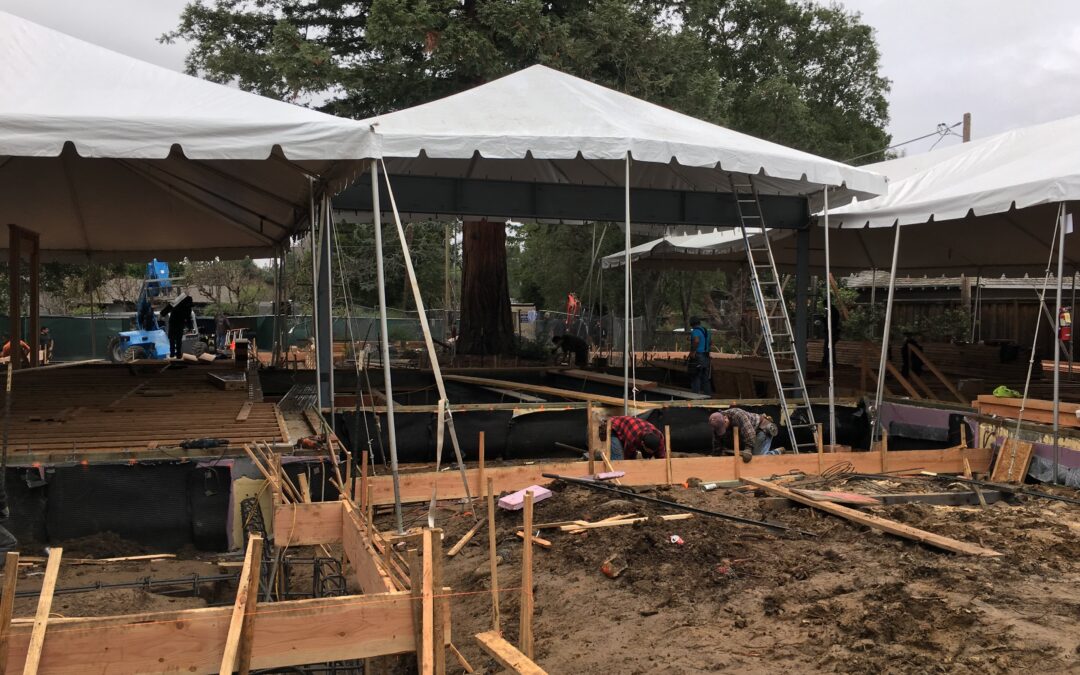
You can’t always find the perfect spot to pitch a tent. When setting up a tent on grass, stakes serve as the primary method for anchoring. However, when the only option is concrete, it requires an entirely different process, unique equipment, and extra precautions to set up a tent. This article explains the proper methods for setting up and anchoring tents on hard surfaces to ensure security and safety.
Why Anchoring Matters on Hard Surfaces
Anchoring a tent is essential to its stability, providing structural support and protection from the wind. Proper anchoring ensures that tents are suitable for use and safe to occupy. Hard surfaces make it more difficult to secure a tent, making it especially important to follow anchoring standards.
What Can Go Wrong with Improper Anchoring
Anchoring is what gives tents the support to remain stable and withstand high winds. Without proper anchoring, tents are susceptible to collapse, displacement, or being blown away. Particularly during inclement weather, external forces can cause tents to shift, lift from the ground, or collapse entirely if they aren’t anchored correctly. This can result in significant damage to the tent or venue, and put occupants at risk of injury.
Choosing the Right Tent for Concrete (and Why It Matters)
The type of tent you choose matters, as not all tents perform equally when set up on hard surfaces like concrete and asphalt.
Frame Tent vs. Pole Tent on Hard Surfaces
Generally, frame tents are the preferred choice for hard surfaces. A frame tent is easier to set up on surfaces like concrete or asphalt and provides superior support compared to pole tents in these situations. Frame tents rely on an internal frame system for support, allowing them to be easily secured with a ballast system at each leg. Meanwhile, pole tents rely on tension from the center poles and perimeter stakes for support, which makes it challenging to get adequate support without the ability to drive stakes into the ground, especially on hard surfaces.
Specialty Setups for Uneven Hardscapes
Environments that pose additional challenges, such as uneven terrain or limited access, may call for specialty tents. High-peak or marquee-style frames are commonly used for large-scale structures on hard surfaces. These tents ensure structural integrity while still providing a large size and elegant appearance.
Anchoring Options for Concrete, Cement, and Pavement
Ballast Systems
Ballast systems are the most common “no drilling” solution for setting up tents on a hard surface. These rely on resistance from heavy materials to weigh the tent down and prevent it from moving when stakes can’t be used. Typically, ballast systems are positioned at each leg of the tent, with additional weight at the corners. Large tents may require hundreds or even thousands of pounds of ballast to be safely supported. Concrete blocks (“block-and-roll” style ballasts) and steel ballast plates are commonly used to add weight and provide extra security at each leg.
Water Barrels / Water Ballasts
Water ballasts are similar to a standard ballast support system but instead use barrels of water to add weight. This is a good alternative on hard surfaces when concrete or steel weights are impractical. Water ballasts can be more challenging to set up, requiring access to water and careful placement at each leg to distribute weight evenly.
Concrete Screws / Mechanical Anchors
Concrete screws and mechanical anchors are the most secure method for anchoring tents on hard surfaces. However, these anchoring techniques aren’t suitable for all venues because they can leave behind damage. To use mechanical anchors, holes must be drilled directly into the concrete, creating a semi-permanent connection between the anchor and surface. Mechanical anchors are typically installed for long-term setups, providing additional support and longevity. It’s important to inspect the condition of the surface before using concrete screws or anchors to secure your tent, as cracked and decaying concrete may not be suitable for safety and support.
Staking into Asphalt or Pavement
Staking directly into the asphalt or pavement is typically the last option for anchoring a tent on hard surfaces. Driving stakes into asphalt or concrete can cause permanent damage to the surface and may not provide adequate support for larger tents. If staking is required, most venues will require the surface to be patched or repaired afterwards.
Step-by-Step: Setting Up a Tent on Concrete or Other Hard Surfaces
- Confirm Layout and Mark Corners: Footprint marking, squaring, and clearance checks
- Protect the Surface: Pads, plywood, or protective layers to prevent scuffs/gouges
- Assemble the Tent Frame: Dry-fit before final tension
- Install the Anchoring System: Place ballast at the correct points
- Add Tension and Secure Tie-Downs: ensure proper angles, tightness, and connection checks
- Add Sidewalls Carefully: Sidewalls often require more and sometimes double-up per leg)
Final Stability Inspection: Walk the perimeter; check connections, movement, and anchor engagement