
Businesses and enterprises often need to rent tents for short-term or long-term use, but there are a lot of factors to consider when choosing the right setup. Below, we explain everything you need to know about local tent rentals.
Local Tent Rental Basics
What a Tent Rental Company Provides
Tent rental companies typically provide the tents themselves, anything related to setup or installation, flooring and staging materials, sidewalls, structural add-ons, lighting, and forms of climate control. Some do provide things like furniture, tables, chairs, linens, etc. while others do not. Double check what each specific company offers and doesn’t offer.
Step 1 — Assess Your Tent Requirements
Capacity and Layout
Firstly, you need to understand the amount of people you are expecting and the exact layout you need for any of the activities you have in mind.
Picking the Right Tent Size
In general, you should plan about 1,000 to 2,000 sq ft per 100 guests, and you should keep in mind any situations in which you would need custom sizing or multiple tents.
Evaluate your Site and Surface
Some tents work only on grass while others work on concrete/asphalt and mixed surfaces. Uneven ground and slope situations will also affect tent type and installation needs.
Weather and Seasonality Planning
You also need to keep in mind the realities of local weather conditions, including seasonal rain, wind, heat, cold, and/or sun. Specific tent types and add-ons are needed for certain weather issues.
Step 2 — Choose the Right Tent Style
Common Tent Types
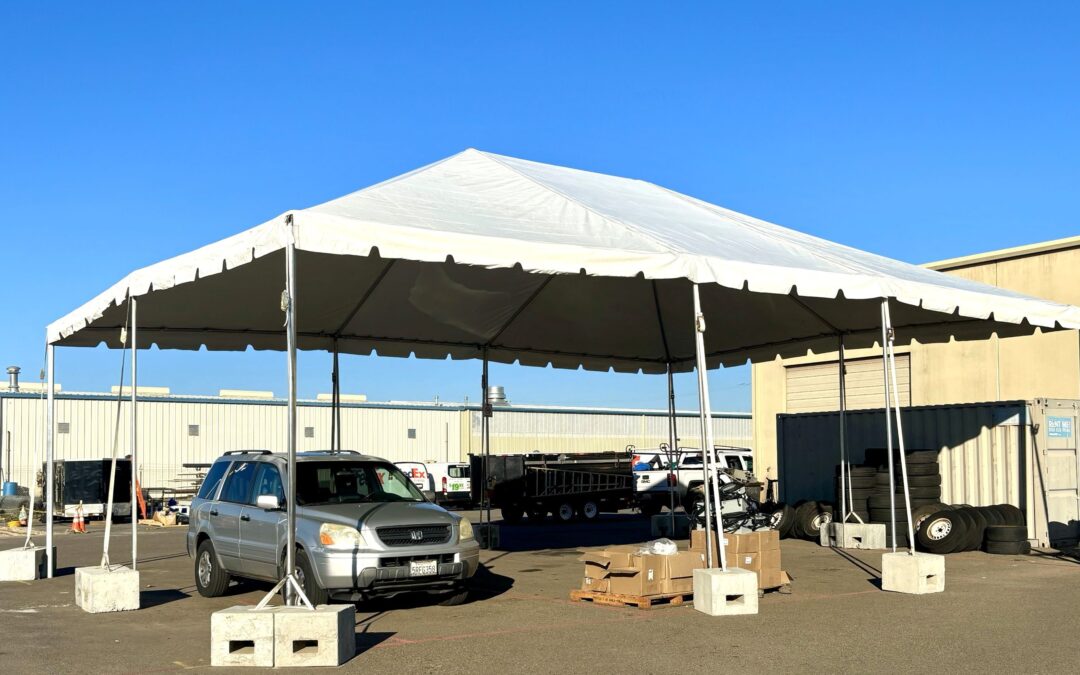
Pole tents are a strong fit for grass surfaces and wide outdoor setups, frame tents are ideal for concrete and tighter layouts, and tension structures are best for large, long-term use.
Specialty Options
Some companies offer clear top tents, marquee / high-peak frame tents for uneven ground, and other specialty tents if you have unique needs.
Step 3 — Materials and Weather Performance
Common Materials
Vinyl and polyester are two common tent materials. Vinyl is the most durable and a strong choice for long-term installations, polyester is lighter and more budget-friendly for shorter-term use, and canvas offers a balance between the two.
Comfort Planning
Air conditioning units and heaters often help tents work amidst unpredictable weather. Sidewalls and doors are also common add-ons to help ventilate a space.
Step 4 — Accessories and Add-Ons That Change the Experience
Lighting and Electrical
Your tent’s ambience can be set by using uplighting, adding string or bistro lights, and maybe even a chandelier or two. All of these will require an electrical distribution system.
Flooring and Subfloor Options
Flooring also plays a major role in the look and function of the space, with options such as plywood, hardwood, astroturf, and portable interlocking tiles.
Layout Planning Tips
You should optimize your tent layouts to accommodate things like guest flow and vendor zones.
Step 5 — Pricing, Quotes, and What Impacts Your Budget
What Drives Tent Rental Pricing
Tent rental pricing is determined by the size, style, material, site complexity, any add-ons, and the timing requirements. The duration of a rental will also affect the pricing.
Extra Fees to Expect
Expect extra fees related to delivery, setup/teardown, permits, cleaning, damage waivers, and any rush fees (if applicable).
How to Compare Quotes
When comparing quotes, keep in mind the difference between packaged rates and itemized quotes so that you know what the exact total will be with each company.
Step 6 — Research and Vet Local Tent Rental Companies
What to Look for in Reviews
When looking at reviews and testimonials, look for situations similar to yours and make sure the company meets all deadlines and customer needs.
Experience and Equipment Quality
Look for years of experience with rentals like yours, and ask specific questions about equipment you need.
Availability and Lead Time
Check for availability around busy seasons and weekends. Ask about logistics and timing, and make sure that the lead time is appropriate.
Step 7 — Logistics: Delivery, Setup, and Teardown
Setup Timelines
The exact setup time will depend on the size and complexity of your tent(s), so plan accordingly.
Site Access Requirements
Keep in mind access points, such as driveways, gates, stairs, and elevators so that your tents can be set up efficiently.
Location Constraints
Work within location constraints, including venue restricts, noise rules, and local union labor laws.
Communication Plan
Make sure you know your day-of point of contact, and communicate any concerns or needs you have.
Step 8 — Permits, Insurance, and Liability
When Permits are Required
Your business will require permits related to local protocols and fire safety guidelines, but the tent rental company should handle them all. Confirm this with them just in case.
Insurance Basics
You should be provided a certificate of insurance (COI) and also have documentation of additional insurances and liability coverage.
Safety Planning
Proper safety planning includes anchoring your tents, establishing wind thresholds, and having an emergency plan in place.
Step 9 — Finalize the Rental Agreement
Contract Checklist
Double check for exact items, dates/times of installation, and responsibilities being promised before finalizing anything.
Payment Schedules and Deposits
Check that the payment scheduling and exact amounts work for your business’ budget.
Cancellation, Rescheduling, and Weather Policies
Be sure to confirm any cancellation, rescheduling, or weather-related policies before booking.
Damage Policies and Walkthrough Expectations
Look over accidental damage policies and complete a walkthrough before signing.
FAQ: Local Tent Rentals
How far in advance should I book?
You should book three to six months in advance so that your preferred size and style of tent are available.
Can tents go on concrete?
Both frame tents and tension structures can go on concrete. Pole tents cannot go on concrete.
What happens if it rains or it’s too windy?
Add-ons like side-walls and specific tent types should protect you from any wind gusts and light to moderate rain.
Do I need a site visit?
A site visit is often recommended to properly assess terrain, but it is not always necessary for smaller setups.
Can I decorate/hang items from the tent?
You can decorate/hang items from the tent as long as they are small, lightweight, and pose no damage to the tent.
What size tent do I need?
You should plan about 1,000 to 2,000 sq ft per 100 guests, but exact size depends on several different factors related to your planned activities.